Sri Balaji BioEnergies Home

Category

Industry Insights

22 articles

The Green Premium in M&A: Why On-Site Biogas Infrastructure Is Rewriting Industrial Asset Valuations

The Green Premium in M&A: Why On-Site Biogas Infrastructure Is Rewriting Industrial Asset Valuations

Mergers and acquisitions teams are increasingly treating on-site biogas systems as value-accretive assets rather than operational footnotes, with some transactions reflecting meaningful premiums for facilities that demonstrate energy independence and verifiable ESG performance. As acquirers face mounting pressure to integrate clean energy commitments across their portfolios, the calculus around bioenergy infrastructure has shifted from operational curiosity to strategic necessity. Understanding
The BTU Nobody Counted: How Thermal Recovery Transforms the True Economics of Industrial Biogas

The BTU Nobody Counted: How Thermal Recovery Transforms the True Economics of Industrial Biogas

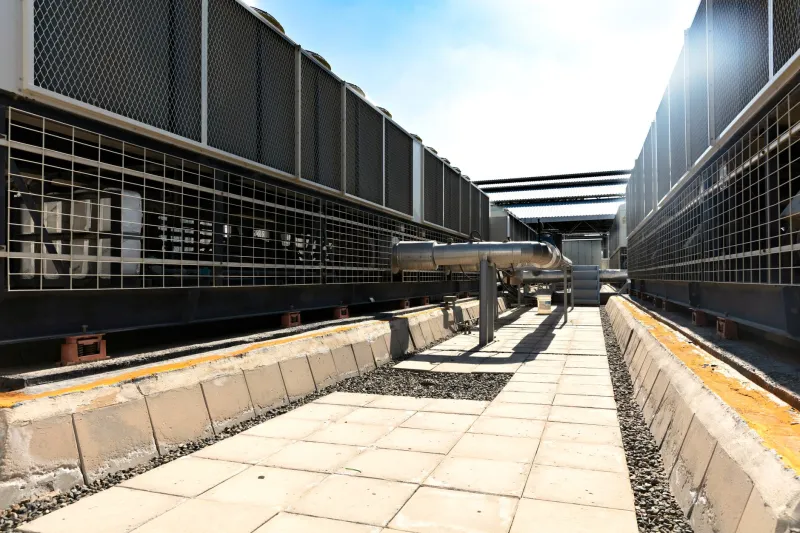
Most biogas ROI models are built around electricity output — and most of them are leaving substantial money on the table as a result. Thermal energy recovery through combined heat and power integration routinely doubles or triples the effective value of a biogas system, yet it remains the most consistently overlooked dimension of industrial bioenergy planning. The facilities that have figured this out are operating at margins their peers cannot explain.

The Regional Arms Race: How Early Biogas Adopters Are Building Competitive Moats That Latecomers Can't Easily Cross

The Regional Arms Race: How Early Biogas Adopters Are Building Competitive Moats That Latecomers Can't Easily Cross

Across the Midwest's dairy corridors and the Northeast's dense food processing belts, a quiet economic realignment is underway. Facilities that committed early to on-site biogas infrastructure are now operating with structural cost advantages that compound over time — and the manufacturers still dependent on grid power are beginning to feel the pressure. Understanding how geographic clusters of biogas adoption reshape regional industrial economics is no longer optional for facility leadership.

The Silent Destroyer on Your Plant Floor: How Poor Power Quality Is Quietly Eroding Your Capital Assets

The Silent Destroyer on Your Plant Floor: How Poor Power Quality Is Quietly Eroding Your Capital Assets

Voltage sags, surges, and harmonic distortion from the commercial grid are steadily degrading sensitive industrial machinery—costing manufacturers far more than their energy bills suggest. On-site biogas generation delivers the kind of stable, clean electricity that precision equipment demands, effectively eliminating a hidden maintenance tax that most facility managers never see coming.

The Efficiency Drain Nobody Talks About: Why Generating Power On-Site Beats Buying It From the Grid

The Efficiency Drain Nobody Talks About: Why Generating Power On-Site Beats Buying It From the Grid

Every kilowatt-hour your facility purchases from the grid arrives carrying a hidden surcharge — the cumulative losses baked into long-distance transmission and distribution infrastructure. For industrial manufacturers, these parasitic inefficiencies represent a silent but measurable drag on operating economics, one that on-site anaerobic digestion systems are uniquely positioned to eliminate.

Fugitive Methane Is Quietly Bleeding Your Bottom Line — And Most Facilities Don't Know It Yet

Fugitive Methane Is Quietly Bleeding Your Bottom Line — And Most Facilities Don't Know It Yet

Undetected methane leaks across industrial operations aren't just an environmental footnote — they represent a compounding financial liability that accumulates long before regulators arrive at your door. The cost of reactive emission management consistently outpaces the investment required for proactive biogas integration. Understanding this gap is the first step toward converting a silent drain into a strategic revenue stream.

One Facility, Five Revenue Lines: How Advanced Biogas Operations Are Redefining Industrial Waste Economics

One Facility, Five Revenue Lines: How Advanced Biogas Operations Are Redefining Industrial Waste Economics

The most forward-thinking industrial operators in America are no longer treating biogas systems as single-output energy assets. By architecting integrated resource recovery platforms around anaerobic digestion, these facilities are simultaneously monetizing electricity, heat, digestate, captured carbon dioxide, and renewable energy credits — converting what was once a compliance cost into a diversified, resilient profit center.

Stranded Costs and Idle Lines: Why Underutilized Facilities Are Paying a Steep Energy Penalty — and How Biogas Rewrites the Math

Stranded Costs and Idle Lines: Why Underutilized Facilities Are Paying a Steep Energy Penalty — and How Biogas Rewrites the Math

Manufacturers running below full capacity don't just lose revenue on the production side — they absorb outsized energy costs that compound quietly on the balance sheet. Traditional utility contracts were designed for steady, high-volume consumption, and facilities that deviate from that model pay a structural penalty. Biogas infrastructure offers a fundamentally different architecture, one that converts variability from a liability into a manageable, margin-preserving asset.

Water Is the New Oil: How Integrated Biogas Systems Are Solving Industrial Facilities' Most Pressing Resource Crisis

Water Is the New Oil: How Integrated Biogas Systems Are Solving Industrial Facilities' Most Pressing Resource Crisis

Water scarcity is no longer a distant environmental concern — it is an immediate operational liability for manufacturers across the American Southwest, Southeast, and Great Plains. Integrated biogas systems are emerging as a dual-purpose solution, simultaneously addressing energy costs and water consumption in ways that traditional infrastructure simply cannot match. This article examines how forward-looking facilities in food processing, chemicals, and semiconductors are deploying bioenergy to

Digestate: The Overlooked Byproduct That Could Become Your Biogas System's Most Profitable Output

Digestate: The Overlooked Byproduct That Could Become Your Biogas System's Most Profitable Output

Industrial biogas facilities routinely focus their financial models on energy generation while an equally compelling revenue opportunity sits in the processing tank. Nutrient-dense digestate—the stabilized organic residue left after anaerobic digestion—is quietly emerging as a premium soil amendment commodity with growing demand across American agriculture. Forward-thinking operators who structure digestate offtake agreements now are positioning themselves to capture a second income stream that

Energy Price Volatility Is a Supply Chain Risk — Here's How Biogas Turns That Threat Into a Strategic Shield

Energy Price Volatility Is a Supply Chain Risk — Here's How Biogas Turns That Threat Into a Strategic Shield

Unpredictable energy costs are no longer just a budget headache — they are a structural vulnerability embedded in your supply chain. Industrial manufacturers who generate their own biogas from on-site waste streams are insulating their operations from market swings that continue to destabilize competitors. This article examines the financial mechanics, real-world precedents, and contractual frameworks that make on-site biogas production one of the most effective risk management tools available t

Methane in Plain Sight: How Industrial Facilities Are Turning Overlooked Waste Streams Into Strategic Energy Assets

Methane in Plain Sight: How Industrial Facilities Are Turning Overlooked Waste Streams Into Strategic Energy Assets

Across food processing plants, agricultural operations, and manufacturing facilities throughout the United States, enormous quantities of methane-generating organic material are being disposed of rather than monetized. The facilities that recognize this untapped potential—and act on it decisively—are quietly building competitive advantages that extend far beyond energy cost savings. This article examines the specific pathways, technologies, and financial realities that define the methane opportu

When Every Acre Counts: How On-Site Biogas Outmaneuvers Solar and Wind for Space-Constrained Manufacturers

When Every Acre Counts: How On-Site Biogas Outmaneuvers Solar and Wind for Space-Constrained Manufacturers

For manufacturers operating on tight footprints, the renewable energy calculus looks very different than it does for sprawling agricultural or utility-scale projects. On-site biogas systems deliver exceptional energy output per square foot — a critical advantage that solar and wind installations simply cannot replicate in constrained industrial environments. This analysis breaks down the land-use economics and ROI scenarios that make biogas the most pragmatic clean energy choice for facilities w

Beyond the Battery: Why Industrial Facilities Are Rethinking Energy Storage Through a Carbon Lens

Beyond the Battery: Why Industrial Facilities Are Rethinking Energy Storage Through a Carbon Lens

Lithium-ion battery storage has become the default answer to renewable energy intermittency, but a closer look at manufacturing emissions, supply chain fragility, and disposal costs reveals a more complicated carbon picture. For industrial facilities pursuing genuinely circular energy strategies, integrating biogas alongside battery infrastructure may offer a more defensible path to deep decarbonization.

Diesel Backup Is a Climate Liability: Why Biogas Resilience Systems Are Rewriting Industrial Emergency Planning

Diesel Backup Is a Climate Liability: Why Biogas Resilience Systems Are Rewriting Industrial Emergency Planning

Diesel generators have long been the default answer to grid disruptions, but their true cost—measured in carbon, compliance risk, and long-term operational drag—is far higher than most facility managers account for. As climate-driven outages intensify across the U.S., biogas-powered backup systems are emerging as the operationally superior and environmentally defensible alternative. This article breaks down the full picture and explains why the industry's default assumption is overdue for a rese

Does Bioenergy Actually Pay Off? The 5-Year Financial Benchmarks Every Facility Manager Needs

Does Bioenergy Actually Pay Off? The 5-Year Financial Benchmarks Every Facility Manager Needs

Bioenergy investments are often evaluated through an environmental lens first and a financial one second — a sequencing that has left many facility managers skeptical and many sound projects unfunded. The reality is that well-structured bioenergy systems consistently achieve payback periods of three to seven years across a range of industrial sectors, driven by energy cost displacement, waste handling savings, and available federal incentives. This breakdown gives budget-conscious operators the

Grid Vulnerability Is Costing Manufacturers More Than They Realize — Hybrid Bioenergy Is the Fix

Grid Vulnerability Is Costing Manufacturers More Than They Realize — Hybrid Bioenergy Is the Fix

Industrial facilities that remain entirely dependent on the conventional power grid are quietly absorbing costs that go far beyond the monthly utility bill. From carbon compliance exposure to supply chain fragility, the risks are compounding — and a growing cohort of mid-sized manufacturers is responding by deploying hybrid bioenergy systems that deliver resilience, cost control, and measurable emissions reductions simultaneously.

Cutting the Cord: How Forward-Thinking Manufacturers Are Achieving Energy Independence Through On-Site Bioenergy

Cutting the Cord: How Forward-Thinking Manufacturers Are Achieving Energy Independence Through On-Site Bioenergy

Major US manufacturers are no longer willing to absorb the financial and operational risks that come with total dependence on the national grid. By deploying on-site anaerobic digesters and biomass energy systems, industrial facilities are achieving measurable cost reductions, supply chain resilience, and a compelling return on investment that is accelerating adoption across sectors.

From Waste Stream to Bottom Line: How America's Largest Corporations Are Profiting from Biogas

From Waste Stream to Bottom Line: How America's Largest Corporations Are Profiting from Biogas

A growing number of Fortune 500 companies are discovering that biogas technology is not merely an environmental gesture—it is a financially compelling strategy that reduces energy expenditures, stabilizes operational costs, and satisfies increasingly demanding sustainability mandates. This analysis examines the real numbers behind the transition, the obstacles companies must navigate, and the measurable returns that are reshaping how industrial America thinks about energy procurement.